
Standing Posture
- Feet placement: Stand with your feet about shoulder-width apart, distributing your weight evenly. One foot can be slightly forward, like a baseball pitcher, to generate power.
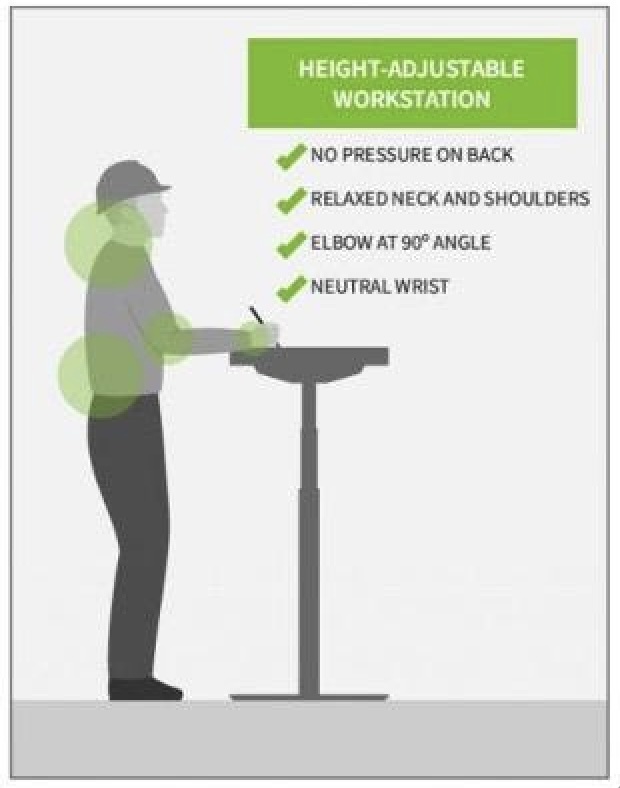
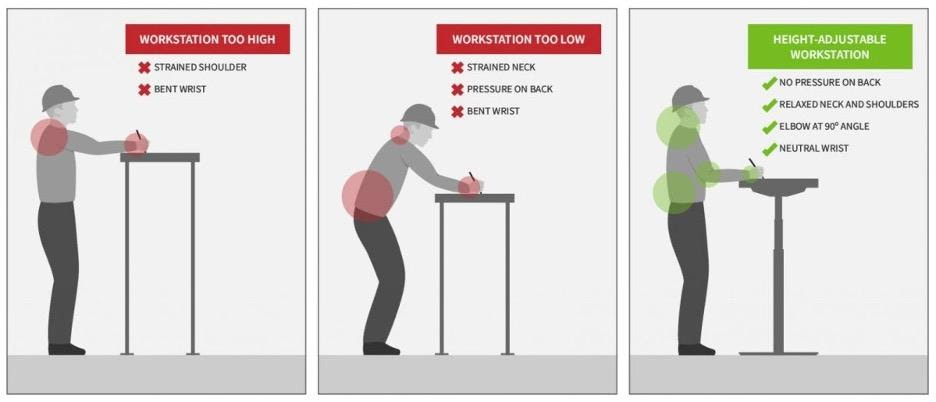
- Work height: Your workbench or work surface height should allow you to work with your forearms parallel to the floor, eliminating the need to reach or bend excessively.
- Back and hips: Keep your back straight and your spine in a neutral alignment. When leaning down, bend at your hips and knees, not by rounding your back.
- Shoulders and arms: Keep your shoulders relaxed, not hunched. Maintain a comfortable grip on tools, avoiding “white-knuckling” to prevent fatigue.
- Balance: Brace yourself against the workbench or a machine for added stability when needed.
Here is a video that demonstrates proper posture while carving and for general woodworking. Check it out.
